Buying Guides
How to Choose Shade Net for Greenhouses and Nurseries: Shade Rate, Roll Size and Weave Compared
Choose shade net by shade rate, roll width and weave — not by colour alone. This guide compares 35–95% shade rates and 2.10/4.20/6.00 m rolls for greenhouses and nurseries, and lists what to send.
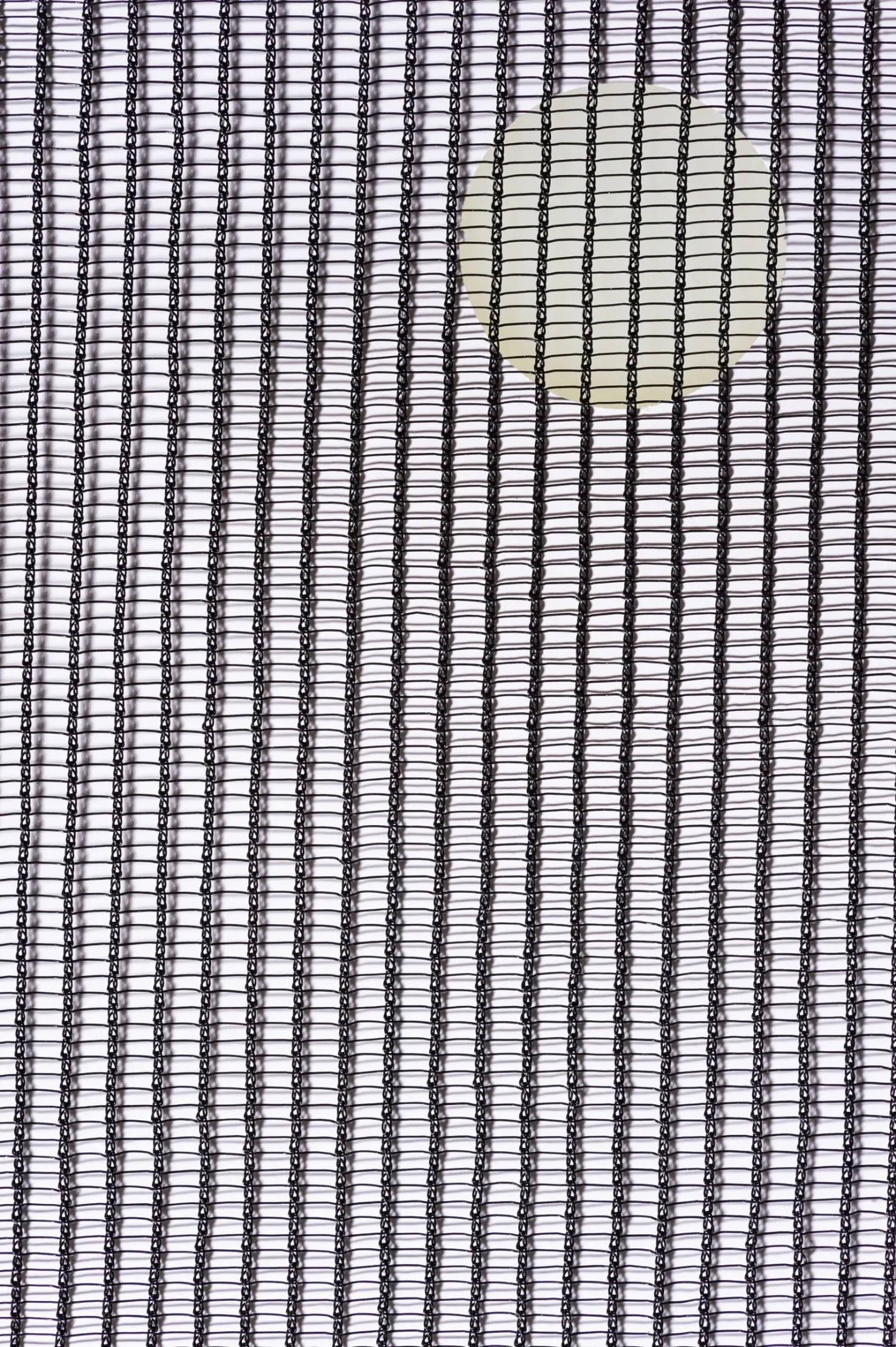
Choosing shade net for a greenhouse or a nursery starts with one question: how much light do your plants need, and how much heat must the net take away?
For most greenhouse and nursery use, a 50% HDPE Raschel shade net is the usual starting point. It cuts half the sunlight while letting air and water through, so plants stay cooler without the air turning stuffy. The rest of this guide shows how to pick a shade rate, a roll size and a weave before you order, so you do not choose by colour alone.
Which shade rate does a greenhouse or nursery actually need?
A shade rate is the share of sunlight the net blocks. The right rate depends on how much light the crop needs and how hot the site gets, not on which rate looks darkest in a photo.
Start with 50% for most greenhouse and nursery work
50% is the most versatile rate in this range, and it is the rate of the product in this guide. It suits vegetables and greenhouse crops and general nursery use. If you are not sure which rate to order first, ask for a sample of the 50% net and check it over your own beds before you order in bulk.
When to go lighter or heavier
The same net is also available in 35%, 65%, 80%, 90% and 95%. Use the table below as a starting point for the conversation with your supplier — it is a guide to asking, not a promise about any one crop.
Shade rate | What it is for |
35% | Lighter shade, for crops and sites that need most of the light |
50% | The versatile middle rate, for most greenhouse and nursery work |
65% | Heavier shade, for stronger sun or more heat-sensitive stock |
80% / 90% / 95% | Heavy shade, for high sun, livestock shelter, carports and privacy screening |
Shade percentage and fabric weight are not the same thing: a 50% shade rating does not mean 50 GSM, and two nets with the same shade rate can have different weights. For this product, GSM is confirmed per shade rate at quotation — ask for it in writing before you compare prices.
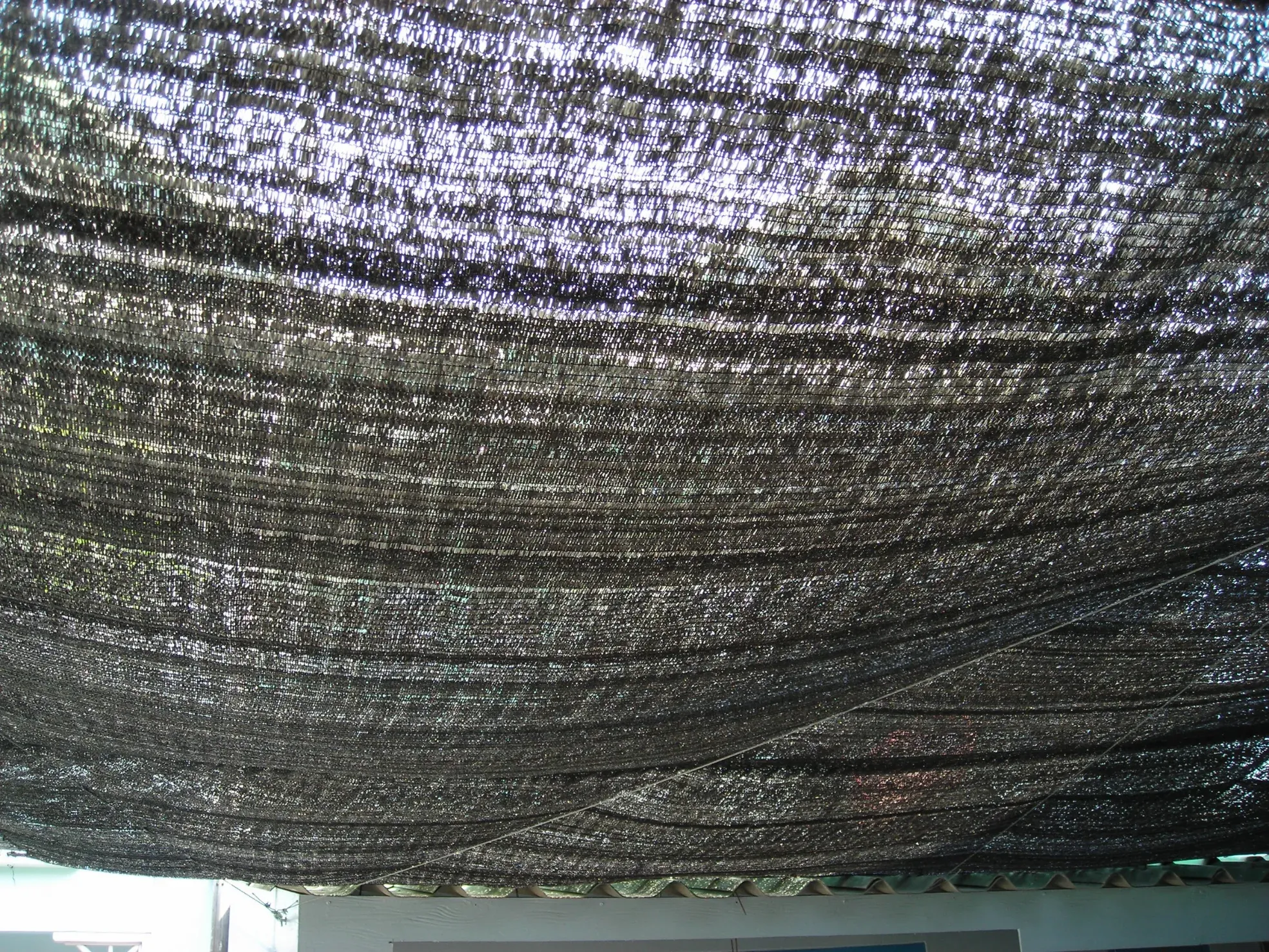
Shade net installed as shade, with light coming through the mesh. Photo: Mattes, CC BY-SA 3.0, via Wikimedia Commons.
Check light and air together
A net that cuts light but blocks air will trap heat. Ask whether air and water pass through the knit at the rate you choose. The Raschel knit in this product is an open knit — it lets air and water through instead of pooling rain — but a sample over one bed, checked on a hot day, tells you more than a catalogue number.
How do roll size and weave change the result?
Shade rate decides how much light is cut. Roll size and weave decide how the net is handled, how many seams it needs, and how it holds up in wind and daily use.
Roll size — wider rolls mean fewer seams
This product is supplied as bulk rolls of 100 m, in widths of 2.10 m, 4.20 m and 6.00 m. Width matters because it decides how many joins you will have across a greenhouse or nursery bed.
Wider rolls cover a large area with fewer seams and faster installation, but they are heavier to handle. Narrower rolls are easier to carry between beds. Before you order, send the width of the area to cover and ask the supplier to suggest a roll width that covers it with the smallest number of joins.
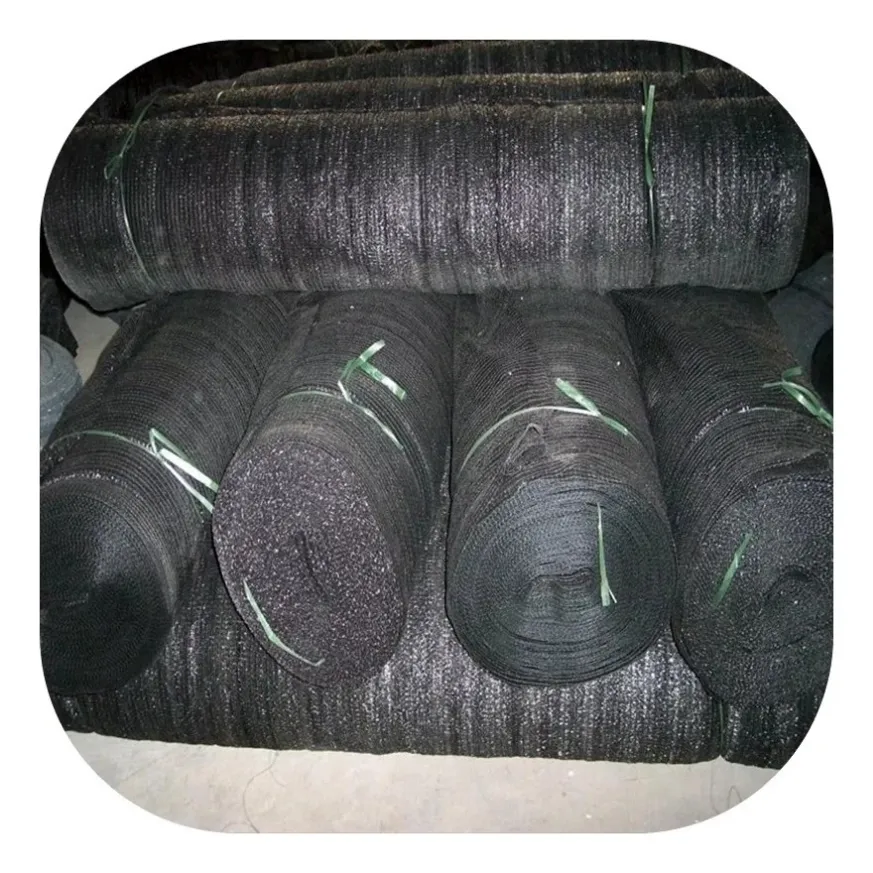
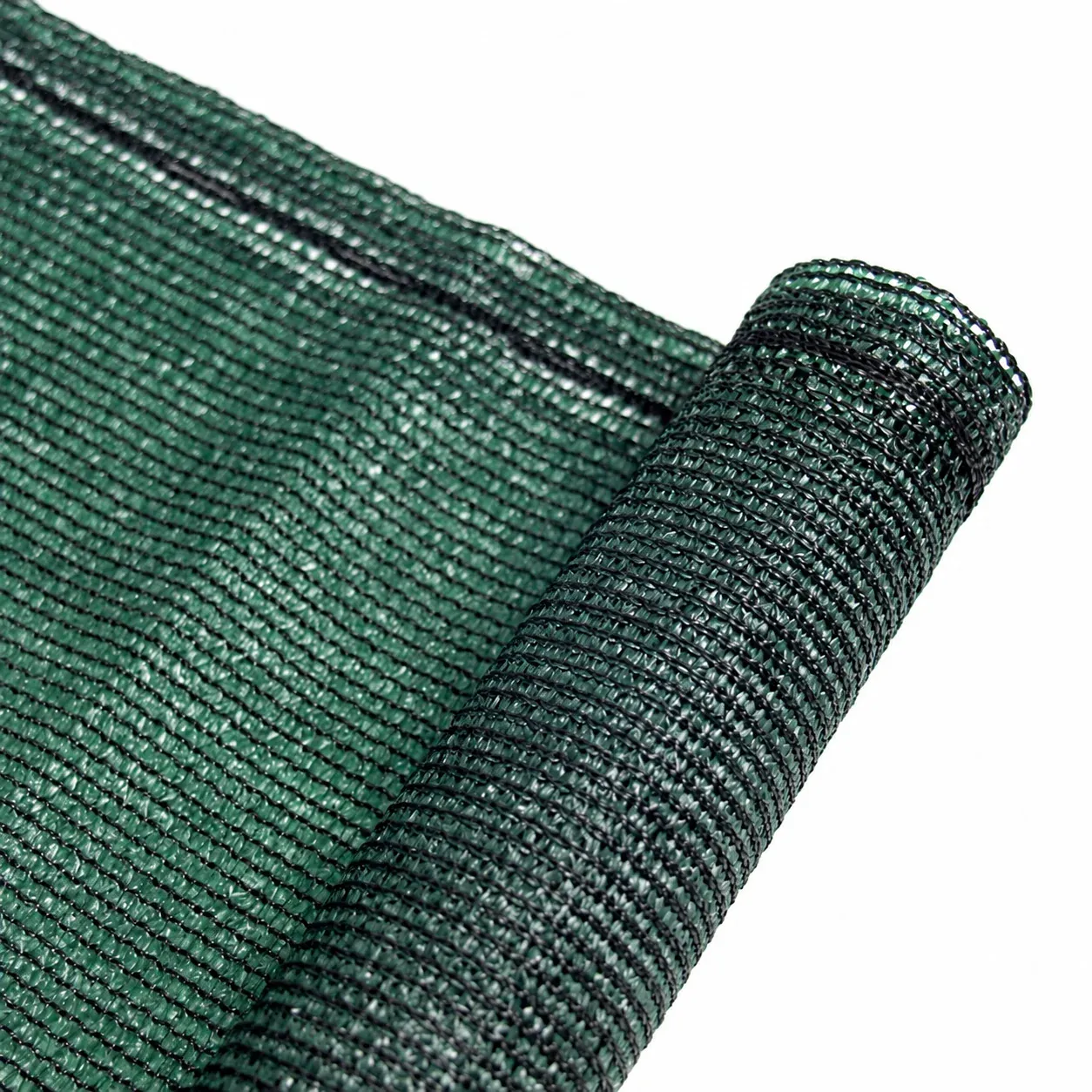
Bulk rolls of black shade net, ready for shipment. Third-party listing photo, used for illustration — not a Kunjie factory photo.
Weave — flat-filament Raschel tape yarns
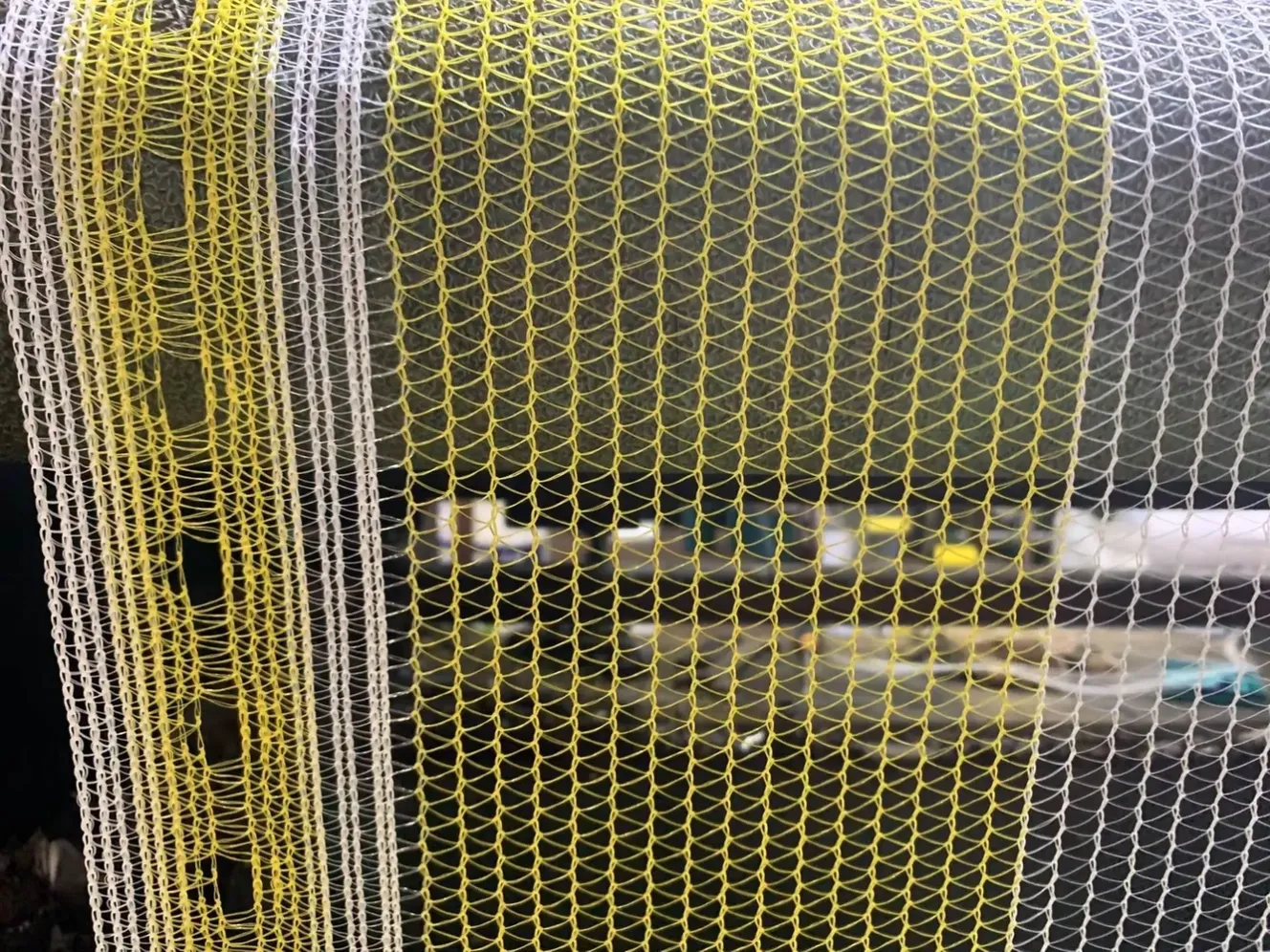
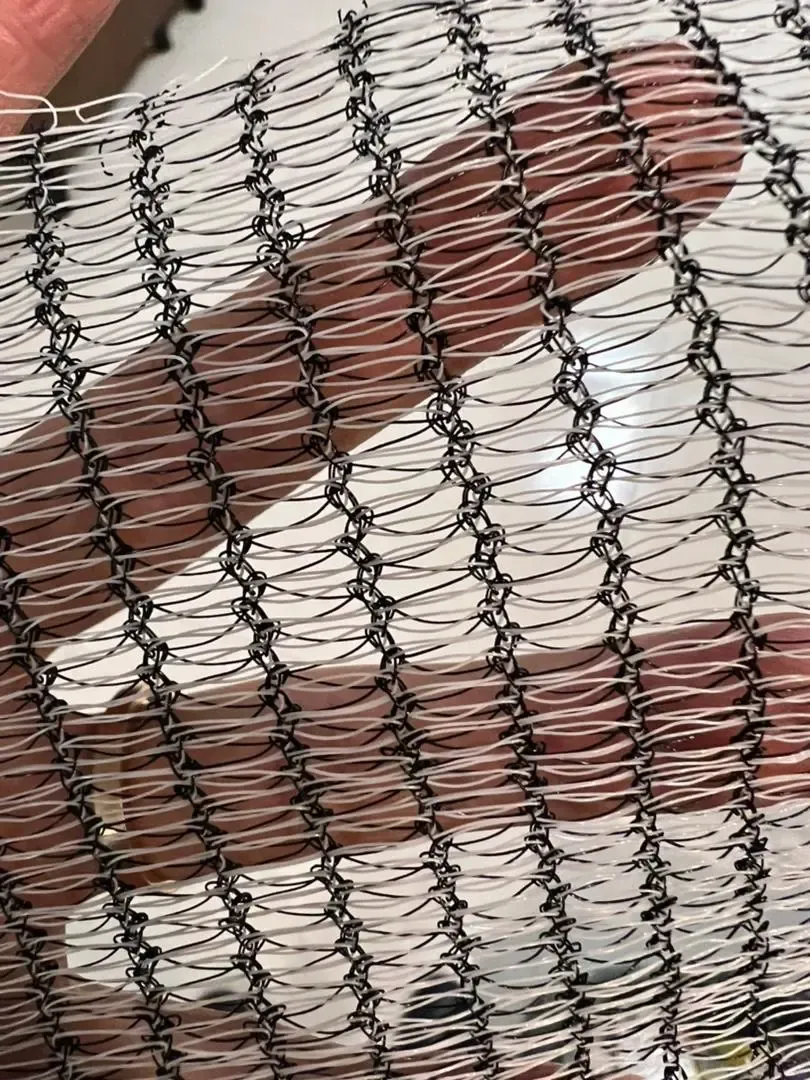
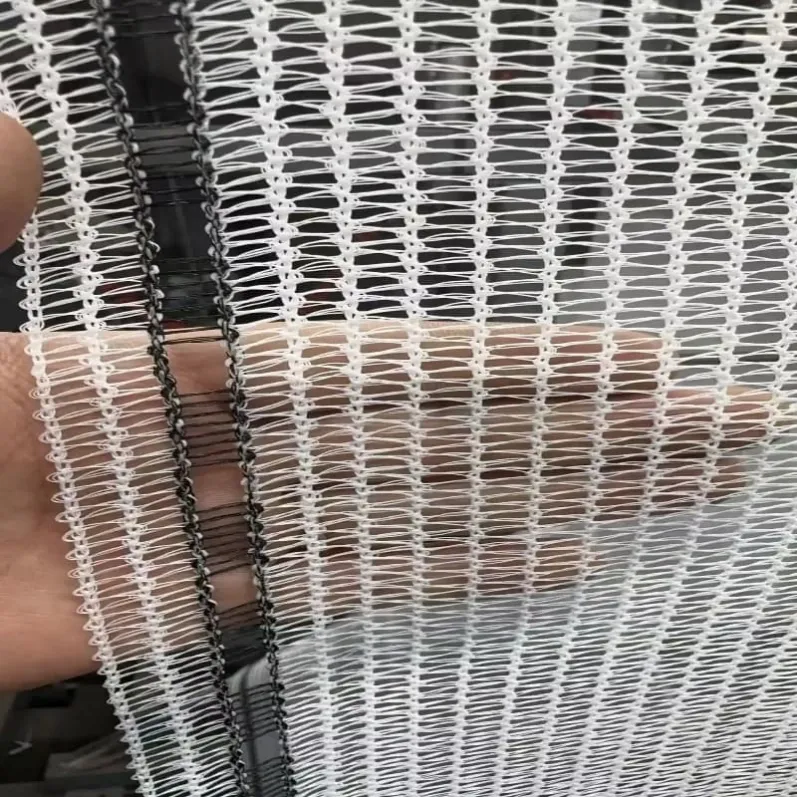
This net is warp-knitted from flat-filament HDPE tape yarns in a Raschel chain stitch. The flat tapes lock together into a strong, tear-resistant knit, and the open structure lets air and water through. When you receive a sample, look at the yarn, not just the colour: flat tape looks like a thin, flat strip, while monofilament looks like a round thread.
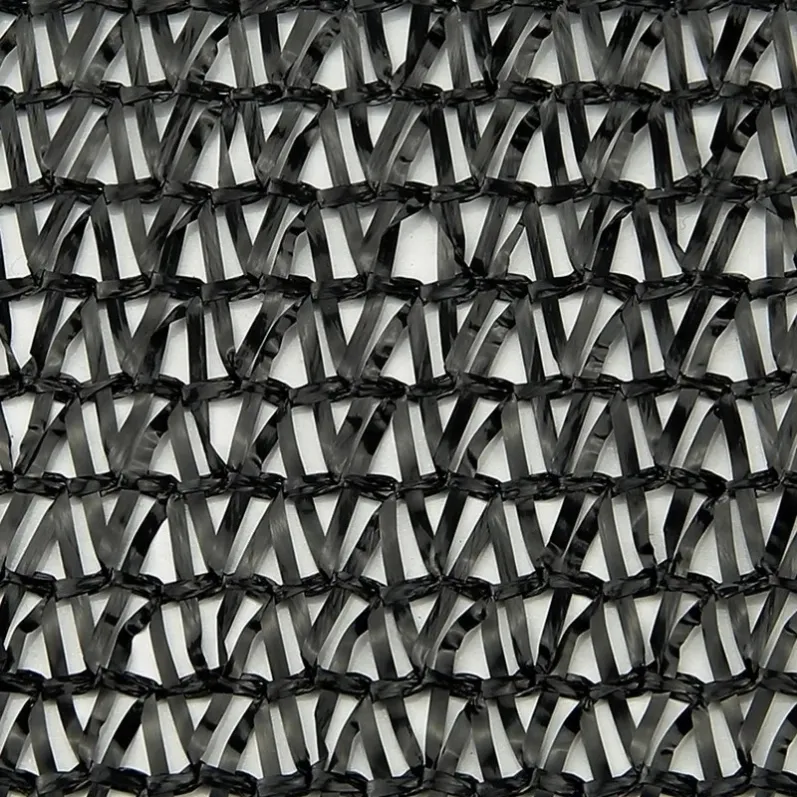
Close-up of black flat-tape Raschel weave.
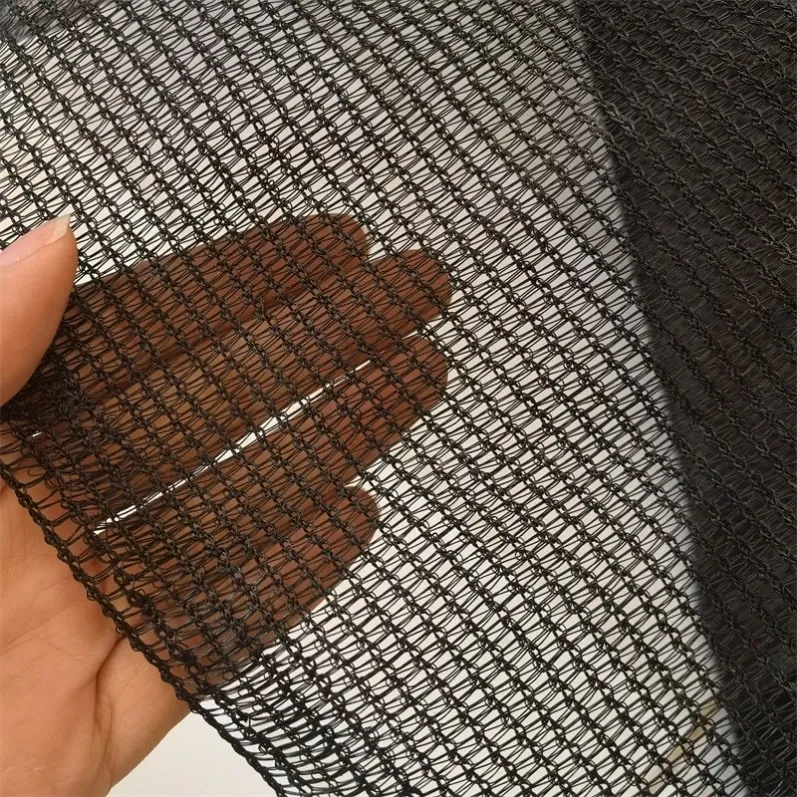
Hand holding black shade net — flat tape yarns visible against the light. Third-party listing photo, used for illustration — not a Kunjie factory photo.
UV and handling
The net is made from UV-stabilised HDPE, so it resists sun damage and brittleness instead of breaking down in strong sun. That is a material statement, not a lifespan promise: no lifespan in years is given for this product.
The net is lightweight and cuts to size with scissors. Wide rolls still need two people to handle safely — plan the labour before the rolls arrive.
What to send before inquiry
A short inquiry gets a faster, more accurate quote. Send:
- Use: greenhouse or nursery, and what is grown under the net, so the supplier can judge the shade rate.
- Area to cover: length and width of the beds or the greenhouse, or total square metres.
- Shade rate you want: 35%, 50%, 65%, 80%, 90% or 95%, and why — for example, stronger sun on your site.
- Roll size: width x length you prefer, for example 4.20 m x 100 m.
- Quantity: total weight in tons, or total rolls. Kunjie Net MOQ is 3 tons, production is 30 days after order confirmation, loading port is Qingdao.
- Colour: this listing is black 50% shade net. Other colours are not confirmed for this listing — ask the factory before ordering a different colour.
Do not send only “shade net price”. Without shade rate, roll size and quantity, a price cannot be compared.
Item | Specification |
Material | HDPE, UV-stabilised, Raschel warp-knitted, flat-filament tape yarns |
Shade rate | 50% (also available: 35% / 65% / 80% / 90% / 95%) |
Roll width | 2.10 / 4.20 / 6.00 m |
Roll length | 100 m |
GSM | Confirm g/m2 per shade rate at quotation |
MOQ | 3 tons |
Production | 30 days after order confirmation |
Loading port | Qingdao, China |
FAQ
Is 50% shade net right for a greenhouse?
For most greenhouse and nursery work, 50% is the usual starting point: it cuts half the light while letting air and water through. If your site has very strong sun, or your crop needs more shade, consider 65% or higher — but check a sample over your own beds first, and ask the supplier for the GSM at the rate you choose.
Does a higher shade rate mean a heavier net?
Not necessarily. Shade rate and GSM are different measures: shade rate is the share of light blocked, GSM is the fabric weight per square metre. Two nets with the same shade rate can have different weights, and a heavier net is not automatically a better one. Ask for the GSM per shade rate in writing before you compare offers.
Can I cut the net to size?
Yes. The net is lightweight and cuts to size with scissors, and wide rolls cover large areas with fewer seams. Plan the cutting and fixing before the rolls arrive, and send the bed or greenhouse dimensions in your inquiry so the supplier can suggest the roll width with the fewest joins.
Shade net installed as shade, with light coming through the mesh. Photo: Mattes, CC BY-SA 3.0, via Wikimedia Commons.
If you are choosing net for a greenhouse or a nursery, send your area, shade rate and quantity to Kunjie Net for a quote on this 50% HDPE Raschel shade net, or view the product page for the full spec table and photos.