How to Choose Anti-Hail Net for Apple Orchards and Vineyards: GSM, Mesh and Roll Size Compared
Choose anti-hail net by GSM, mesh, width and edge — not by price alone. This guide compares 50–90 GSM mono + mono net for apple orchards and vineyards, and lists what to send before inquiry.
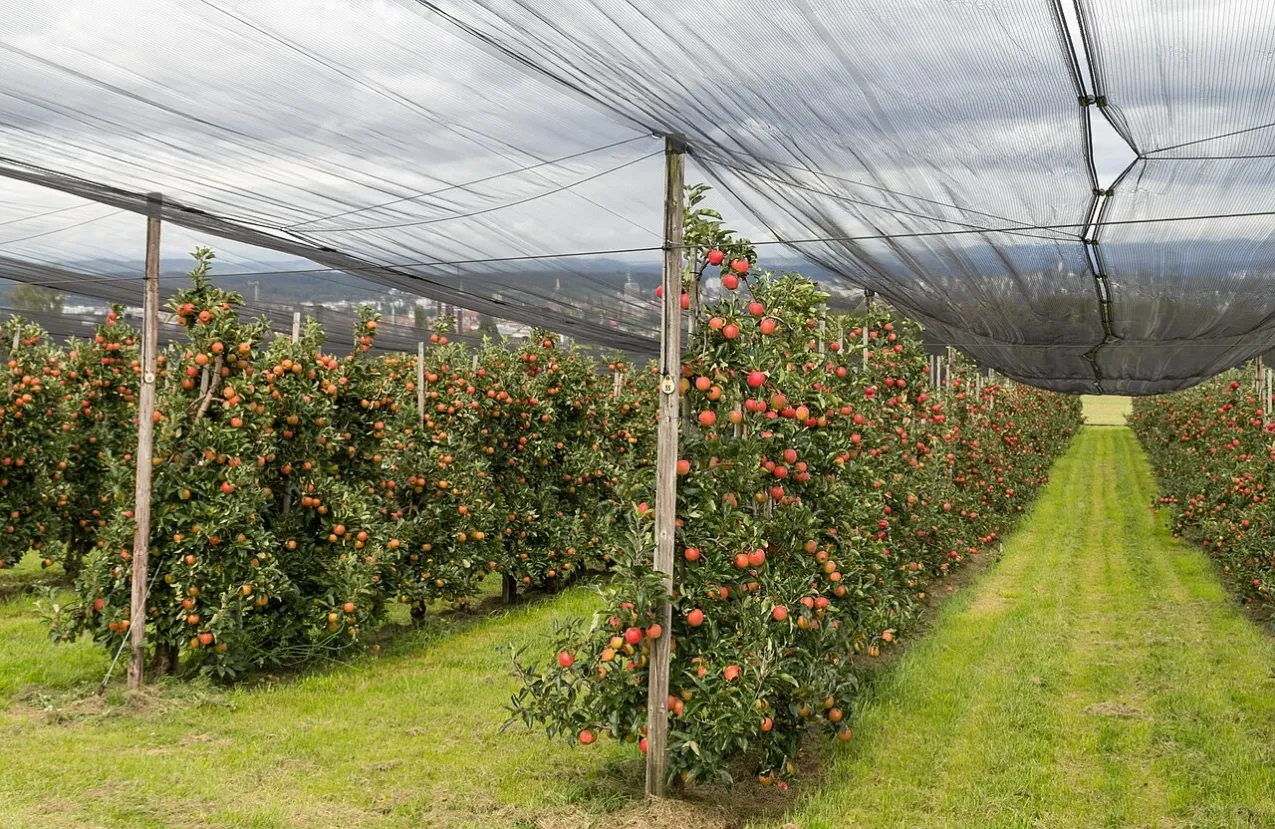
Choosing the right anti-hail net starts with one question: what size of hail do you need to stop, and how much light and air must still reach the fruit?
For most apple orchards and vineyards, a 50–90 GSM mono + mono HDPE anti-hail net is the usual starting point. It is strong enough to break hailstone's fall, light enough to keep the canopy open, and it can be made in 50 m and 100 m rolls. The rest of this guide shows how to check GSM, mesh, width and edge before you order, so you do not choose by price alone.
Why GSM alone does not tell you if a net will hold
GSM is weight per square metre. A heavier net is usually stronger, but two nets at the same GSM can behave differently.
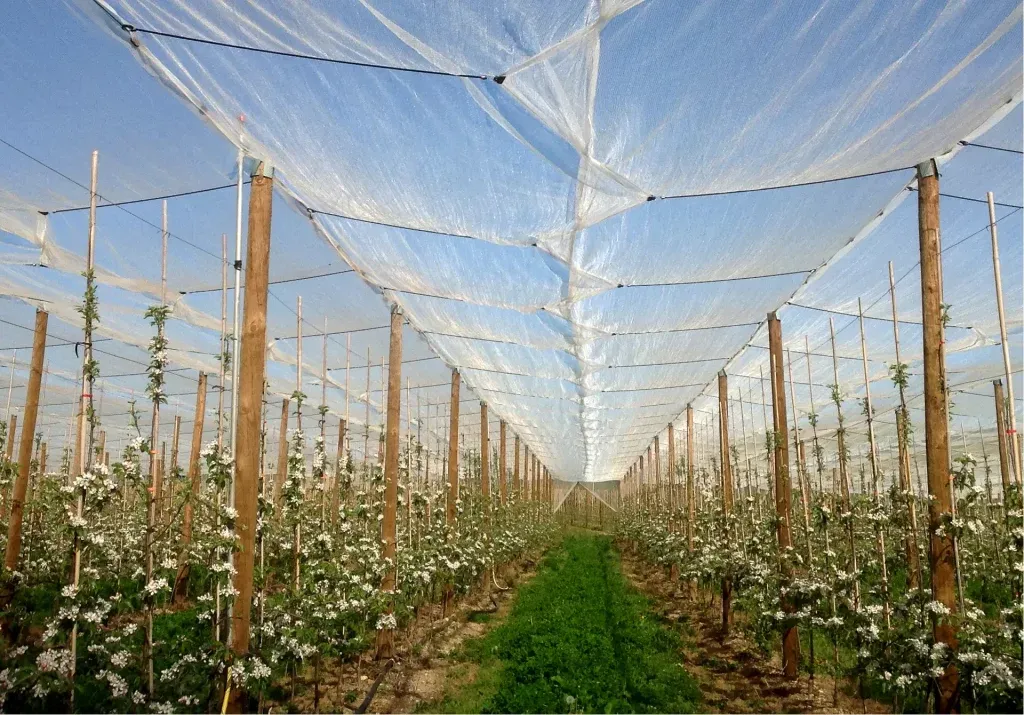
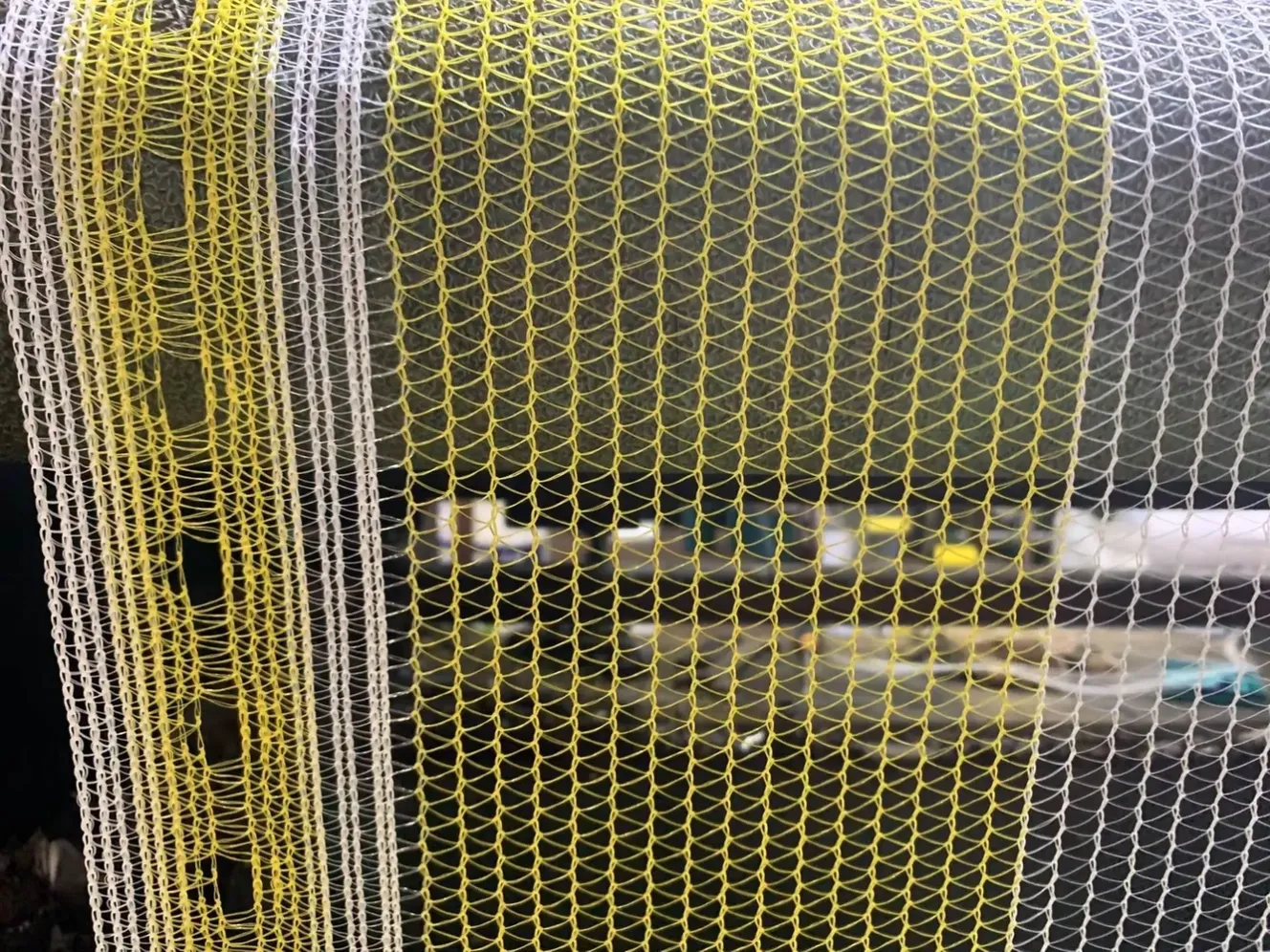
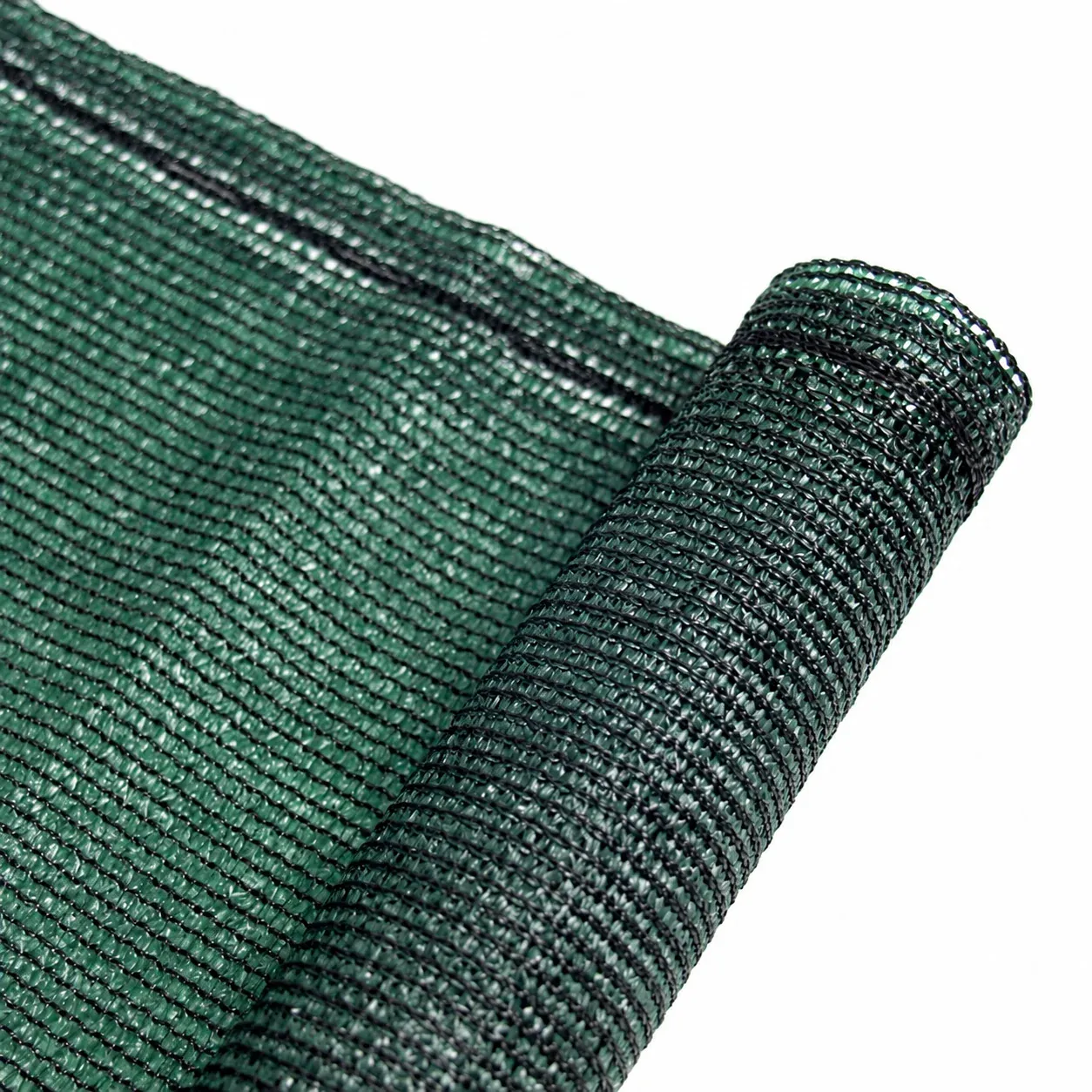
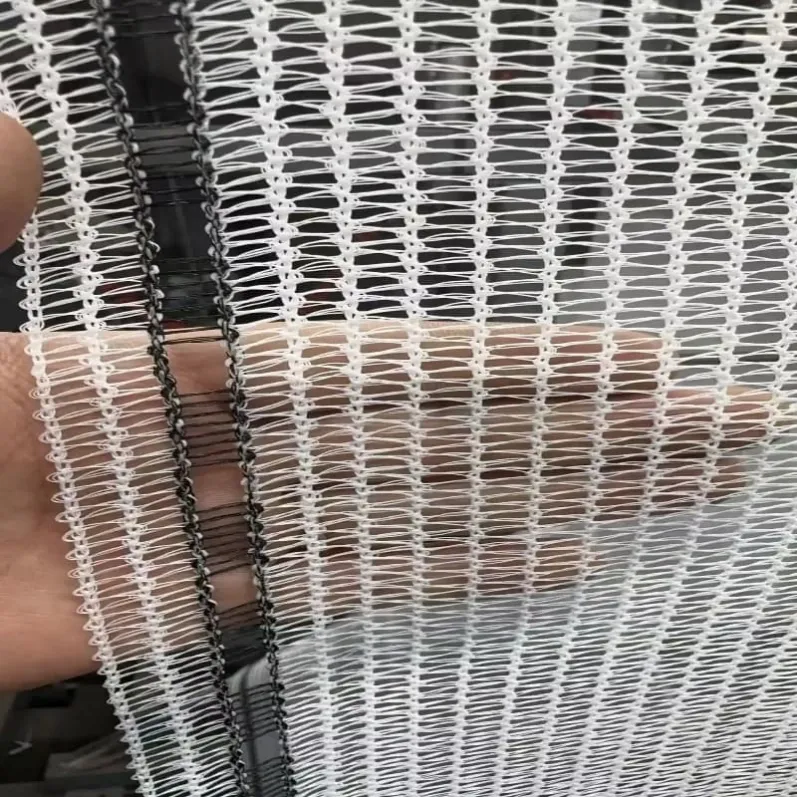
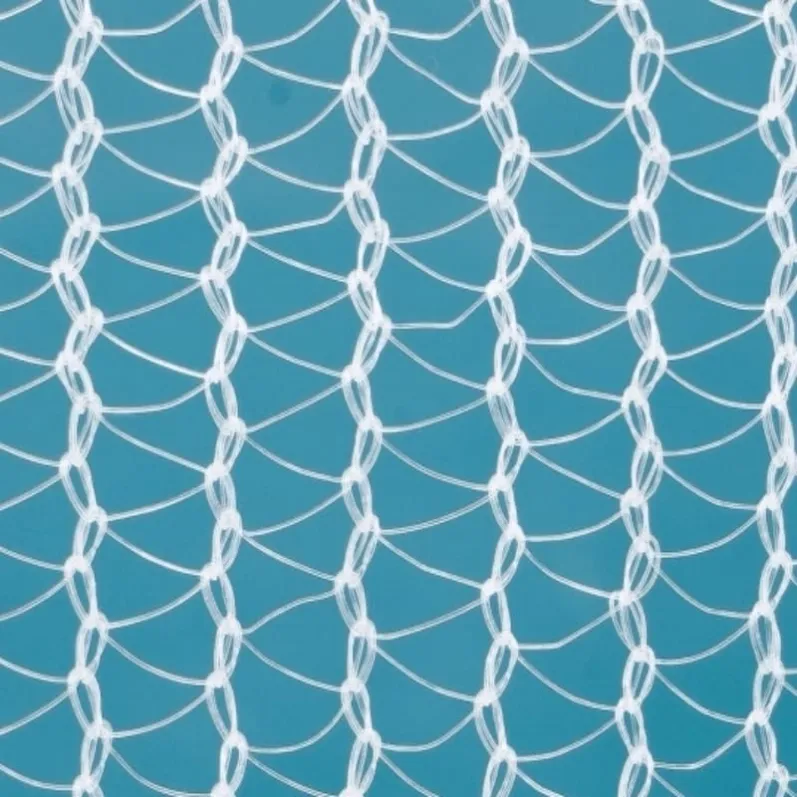
First, check the yarn. This Kunjie Net product is mono + mono: both directions are monofilament HDPE yarn. That is the weave in the photos — a knitted diamond mesh, not a flat tape. Monofilament holds its shape after impact and lets air move through the mesh.
Second, check what the GSM range covers. 50 GSM is the light end of this range and suits areas with small, occasional hail or where the net is also used for light shade and bird protection. 90 GSM is the heavy end and suits areas with larger hail and orchards where the fruit value is high. If a supplier only gives one GSM number with no range, ask which GSM that number is for, and whether the roll you receive will be that GSM across the full width.
Third, do not compare a 50 GSM net and a 90 GSM net by price per kilogram alone. Ask for price per square metre, or per roll of the same width and length, so the comparison is like for like.
How to check mesh, width and edge
Mesh size
Mesh size decides what gets through. A mesh that is too open will let small hail through. A mesh that is too tight will cut light and trap heat.
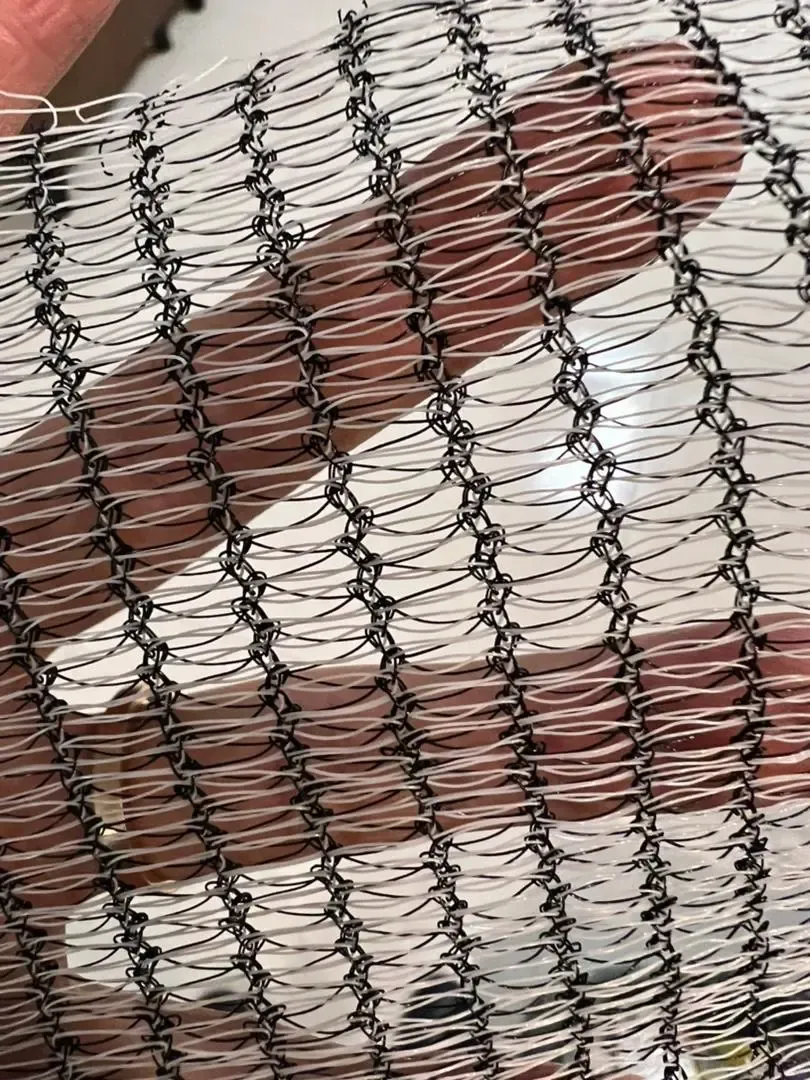
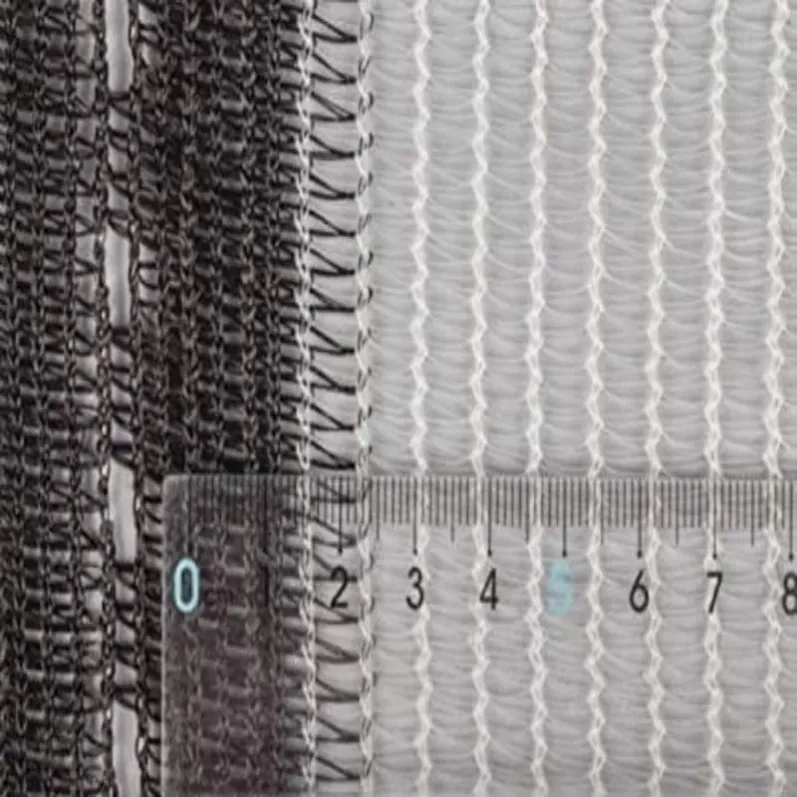
For anti-hail use, the mesh for this product is 3–8 mm, as confirmed by Eric. When you receive a sample, lay a ruler across the mesh, as in photo 3, and count the openings across 10 cm. That is a faster check than trusting a catalogue number.
Width and length
The rolls for this product are available in widths 2 m, 3 m, 4.2 m and 6 m, up to 8 m maximum, in lengths of 50 m and 100 m. Width matters because it decides how many seams you will have across an orchard row.
Wider rolls mean fewer seams and faster installation, but they are heavier to handle and harder to ship. Narrower rolls are easier to carry between rows. Before you order, send the row width and post spacing, and ask the supplier to suggest a roll width that covers one row with the smallest number of joins.
Reinforced edge
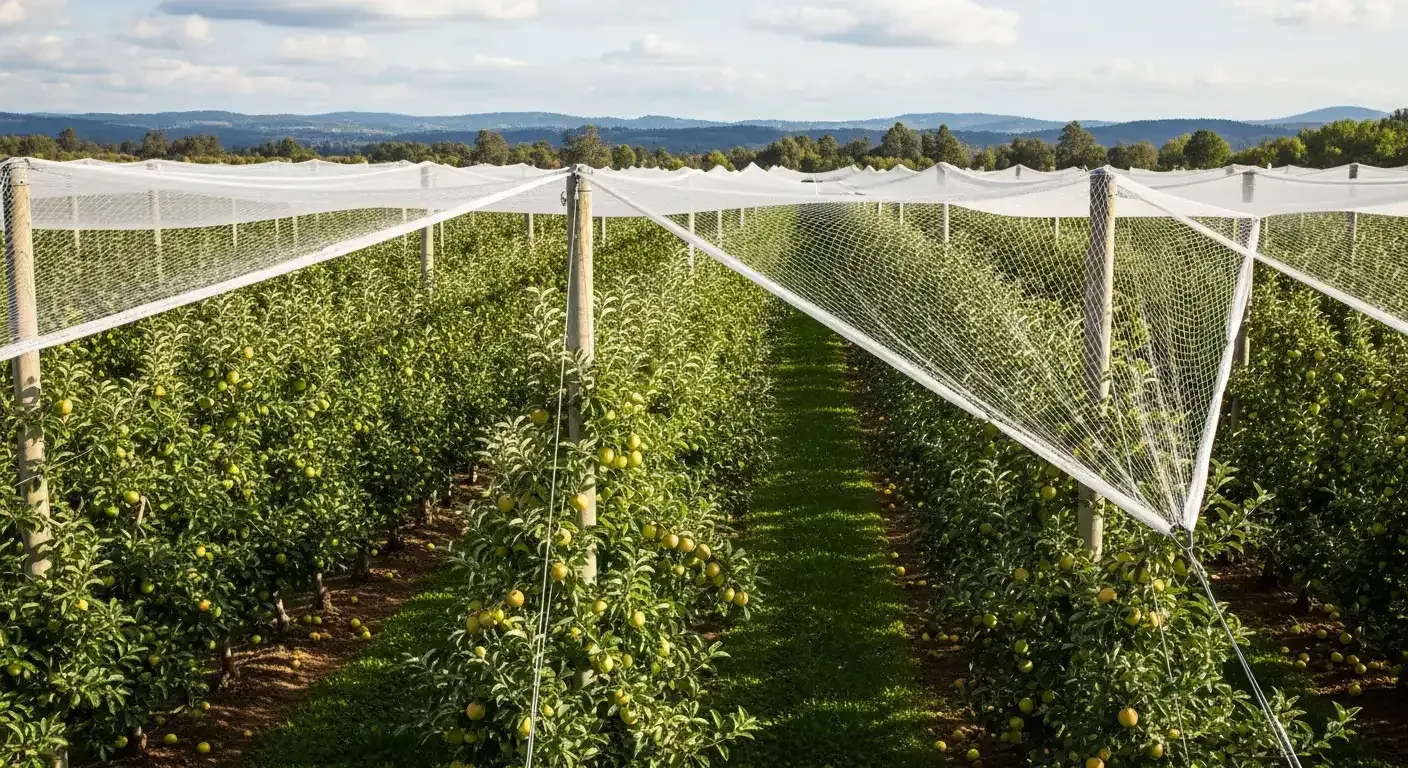
Look at photo 1: the white net has a black reinforced edge. That edge is where clips, hooks and cables grip the net. A net without a reinforced edge can tear at the fixing points in wind. This product has the reinforced edge on both sides.
Ask two things: how wide is the reinforced edge, and is it included in the stated roll width or added to it? A roll quoted as 3 m wide with a reinforced edge added on top is not the same as a 3 m roll including the edge.
What to send before inquiry
A short inquiry gets a faster, more accurate quote. Send:
- Crop and location: apple orchard or vineyard, and the country or region, so the supplier can judge hail size and UV level.
- Area to cover: row length, row width, and number of rows, or total square metres.
- GSM you want: 50, 70, 90 GSM, or a range, and why — for example, larger hail in your area.
- Roll size: width × length you prefer, for example 3 m × 50 m.
- Colour: white or black, and whether you need a reinforced edge.
- Quantity: total weight in tons, or total rolls. Kunjie Net MOQ is 3 tons, production is 30 days after order confirmation, loading port is Qingdao.
Do not send only "anti-hail net price". Without GSM, width and quantity, a price cannot be compared.
FAQ
Q1: Is white or black anti-hail net better?
White lets more light through and is the standard colour in the photos. Black is also available. Choice depends on how much shade your crop can take. Ask the supplier for the light transmission for the GSM you choose — do not assume white and black at the same GSM give the same light.
Q2: Can one net protect both apples and grapes?
Yes, if the GSM, mesh and roll width fit both. Vineyards often use narrower rolls between vine rows. Apple orchards often use wider rolls over the canopy. Send both row layouts in one inquiry so the supplier can suggest one roll size or two.
Q3: How long does installation take to plan?
Allow time for the net, posts, cables and clips, not just the net itself. Order in time for the hail season — in Chile and Argentina, for example, ordering is usually late August / September for installation in early December, ahead of the October–March hail season. Confirm your season dates with your installer.
If you are choosing net for an apple orchard or a vineyard, send your row size, GSM and quantity to Kunjie Net for a quote on this 50–90 GSM mono + mono anti-hail net, or view the product page for the full spec table and photos.